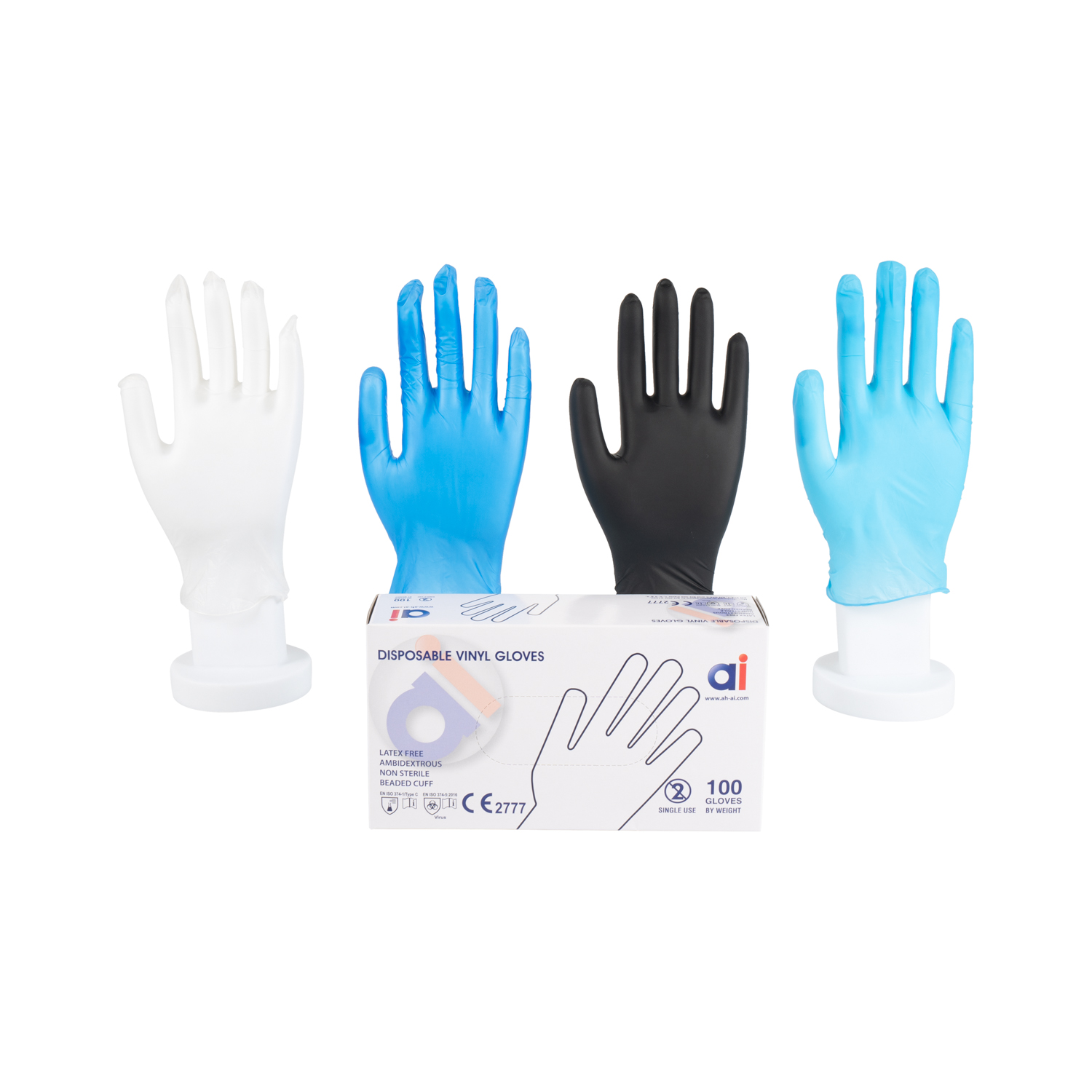


“Rubber gloves” is one of those shopping terms that hides a fork in the road. Walk into any US retailer and you will find latex, nitrile, and vinyl boxes sitting side by side, often within a dollar or two of each other, and the labels do not make the trade-offs obvious. The cheapest box is not always the cheapest option, because the right glove depends on what you are asking it to do — wash dishes, handle raw chicken, color hair, trim a plant, or strip a cannabis bud.
This guide breaks down the three mainstream materials, answers the questions people actually search for, and ends with task-by-task recommendations so you can buy one or two boxes instead of five.
The three materials, in plain terms
Latex is natural rubber. It offers the best elasticity and fit, which is why it dominated the market for decades. It is also the material most likely to trigger allergic reactions, and it degrades faster than synthetics when exposed to oils and solvents.
Nitrile is a synthetic rubber. It resists punctures, oils, and many chemicals better than latex, fits snugly, and contains no natural rubber latex. It is the most expensive of the three per glove, though the gap narrows at bulk volumes.
Vinyl is polyvinyl chloride (PVC). It is the cheapest material, the loosest fitting, and the least durable under stress — but it is also latex-free and perfectly adequate for short, light-duty tasks.
The affordability question is really a cost-per-task question. A 3-mil vinyl glove at four cents looks cheaper than a 4-mil nitrile glove at twelve cents until the vinyl glove tears halfway through a sink of dishes and you use three of them.
Do vinyl gloves have latex?
No. Vinyl gloves are made from PVC and are latex-free by definition. This is the single most common reason people buy them: a household with a latex allergy can use vinyl gloves safely. The trade-off is fit — vinyl does not stretch, so the glove sits looser and feels clumsier for precision work. If someone in the house has a latex sensitivity and you need a snug fit, nitrile is the better latex-free choice; vinyl is the budget latex-free choice.
Can I use vinyl gloves for cooking?
For light, short-contact food handling, food-grade vinyl is acceptable. Tossing a salad, assembling sandwiches, or portioning dry ingredients is well within what a food-grade vinyl glove can handle.
There are limits worth respecting. Vinyl is not heat-resistant, so it has no place near an oven, a hot pan, or a pot of boiling water. It is also a poor choice for prolonged contact with fatty or oily foods, because the plasticizers in vinyl can migrate under those conditions. And vinyl tears easily, which matters when you are handling bones or heavy chopping work. For raw meat, fish, and anything greasy, nitrile holds up better and gives you more tactile control.
The critical label to look for is “food-grade” or “food-safe” — not all vinyl gloves are manufactured for food contact. A glove sold for cleaning or industrial use is not automatically appropriate for cooking.
Can I throw latex gloves in the trash?
Yes, in ordinary household quantities. Disposable latex, nitrile, and vinyl gloves are not recyclable and should not go in the recycling bin, but they are accepted in normal household trash in the vast majority of US municipalities. Do not flush them.
Two caveats. If a glove has been contaminated with a strong chemical, a pesticide, or bodily fluids, follow your local household hazardous waste guidance rather than tossing it in the kitchen bin. And if you are using gloves in commercial quantities — a salon, a food business, a grow operation — commercial waste rules may differ from residential ones.
Task-by-task: what to actually buy
Dishwashing, bathroom cleaning, and general household scrubbing
For everyday cleaning, reusable rubber gloves beat disposables on cost and durability. If you prefer disposables, a 4–5 mil nitrile glove survives a full cleaning session; 3-mil vinyl often does not. Buy nitrile for the cleaning caddy and keep vinyl for quick, dry tasks.
Food prep
Food-grade nitrile for raw meat and fish; food-grade vinyl is fine for light, dry handling. Check the box for a food-contact designation either way.
Hair coloring
This is one place where material choice genuinely matters. Nitrile gloves for hair coloring are the salon standard because nitrile resists dye, developer, and bleach far better than latex or vinyl, both of which can stain, degrade, or let color bleed through during a long processing time. Black nitrile is popular because it hides stains and looks professional.
Nail tech work
Nail tech gloves should be nitrile, powder-free, and snug-fitting. Acetone, monomer liquid, and filing dust all punish vinyl, and latex can react with solvents. A 4-mil black nitrile glove in the correct size gives the dexterity that detailed nail work requires.
Cannabis trimming and bud stripping
Ask anyone who has spent a weekend with scissors and a sticky plant and you will hear the same answer: nitrile. Best gloves for trimming weed are powder-free nitrile, usually 4–6 mil, in black or blue. Cannabis resin adheres aggressively to latex and vinyl, turning the glove into a sticky mess within minutes; nitrile resists it better and can be changed quickly. Vinyl tears on stems and sugar leaves, and latex both collects resin and carries allergy risk in a shared trim room. If you are buying cannabis bud stripping gloves or trimming cannabis handling gloves in bulk for a harvest, nitrile in a range of sizes is the practical choice — snug enough to feel the stem, thick enough not to shred.
Gardening and yard work
Disposable gloves are the wrong tool for heavy yard work; use coated reusable gloves. For light potting and seed starting, nitrile works well.
Where the affordability actually comes from
Retail boxes of 100 are convenient but rarely the cheapest per glove. The US market is supplied heavily by overseas factories — vinyl gloves manufacturers in China and their nitrile counterparts produce a large share of the gloves sold under American retail brands. Buying direct in bulk cases of 1,000 can meaningfully reduce cost per glove for households that go through them quickly, or for small businesses like salons, food stalls, and grow operations.
If you buy bulk or import, verify three things: the material and mil thickness stated on the specification sheet, a food-grade certification if the gloves will touch food, and documentation for medical or examination claims if you are buying those grades. The savings are real, but only when the specification matches the task.
A quick buying summary
| Task | Best affordable choice | Why |
|---|---|---|
| Dishes and cleaning | Reusable rubber; or 4–5 mil nitrile | Durability beats cheap disposables |
| Light food prep | Food-grade vinyl | Cheapest latex-free option that works |
| Raw meat and fish | Food-grade nitrile | Better grip, puncture resistance, oil resistance |
| Hair coloring | Nitrile, black | Resists dye and developer |
| Nail tech | Nitrile, powder-free, snug | Solvent resistance and dexterity |
| Cannabis trimming | Nitrile, 4–6 mil, black or blue | Resin resists nitrile; vinyl tears |
| Latex allergy household | Vinyl (budget) or nitrile (fit) | Both are latex-free |
For a single box that covers the most household ground, powder-free nitrile in 4 mil is the best all-purpose buy in the US today — it handles food, cleaning, hair color, and sticky plant work without failing, and the price gap over vinyl has narrowed considerably. Keep a cheaper box of food-grade vinyl for light, dry food tasks and quick cleanups where fit and durability do not matter. Skip latex unless you specifically want its elasticity and have confirmed no one in the household reacts to it.
Buy the material that matches the task, buy it in the size that actually fits, and buy in bulk only after you know which box you keep reaching for.