



When choosing disposable gloves for food preparation, cleaning, healthcare, manufacturing, or laboratory work, one of the most common questions is: Do vinyl gloves have latex in them?
The short answer is generally no. Traditional vinyl gloves are made from polyvinyl chloride (PVC), rather than natural rubber latex. This makes vinyl gloves a popular alternative for people and workplaces looking to reduce exposure to latex.
However, not all disposable gloves are made from the same material. Understanding the differences between vinyl, nitrile, TPE, and latex gloves can help you choose the right product for your application.
Do Vinyl Gloves Contain Latex?
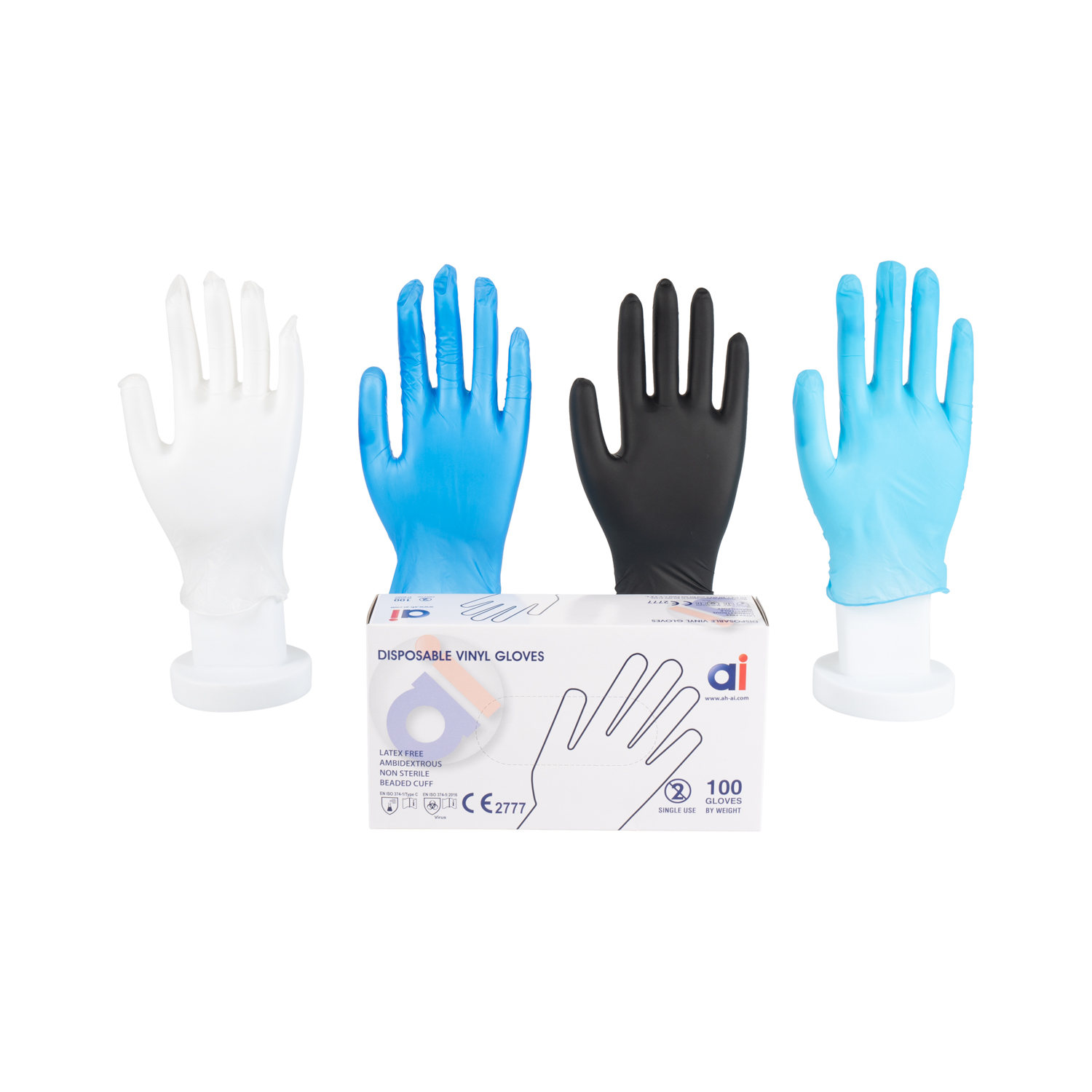
Traditional vinyl gloves are latex-free. They are manufactured primarily from polyvinyl chloride (PVC) and plasticizers, rather than natural rubber latex.
Because vinyl gloves do not use natural rubber latex as their primary material, they are often selected for applications where latex-free protection is preferred.
For example, vinyl gloves are commonly used in:
- Food preparation and food processing
- Restaurants and catering
- Household cleaning
- General-purpose cleaning
- Beauty and personal care
- Light industrial applications
- General examination and handling tasks
When purchasing disposable gloves, it is still important to check the manufacturer’s product specifications and packaging to confirm that the gloves are latex-free.
Why Choose Latex-Free Vinyl Gloves?
One of the main advantages of vinyl gloves is that they provide a practical latex-free option for many everyday applications.
Vinyl gloves are generally:
Latex-free: Traditional vinyl gloves are made from PVC rather than natural rubber latex.
Cost-effective: Vinyl gloves are often an economical choice for high-frequency glove changes.
Easy to put on and remove: Their smooth surface allows convenient donning and removal.
Ambidextrous: Many disposable vinyl gloves can be worn on either hand, making them convenient for fast-paced workplaces.
Suitable for short-term tasks: They are commonly used for light-duty applications where high chemical resistance or maximum puncture resistance is not required.
For businesses that need to change gloves frequently, vinyl gloves can provide a cost-effective solution.
Vinyl Gloves vs. Nitrile Gloves
While both vinyl and nitrile gloves are commonly used as latex-free disposable gloves, their performance characteristics are different.
Nitrile gloves are made from synthetic nitrile rubber and are known for their strength, flexibility, and resistance to punctures. They are frequently used in healthcare, laboratories, automotive work, cleaning, and industrial environments.
For demanding applications, a black nitrile disposable glove can offer better durability and protection than a standard vinyl glove.
Nitrile gloves are also available in different designs and formulations. For example, nitrile glove diamond or diamond-textured nitrile gloves can provide enhanced grip for industrial and heavy-duty applications.
By comparison, vinyl gloves are usually better suited to light-duty tasks where affordability and frequent replacement are more important than maximum durability.
What About Black Nitrile Gloves?
Black nitrile gloves do not contain natural rubber latex when manufactured as standard latex-free nitrile gloves. They are made from synthetic nitrile rubber.
Black nitrile gloves are popular in industries where appearance and durability are important. The dark color can help conceal stains and is particularly common in:
- Automotive services
- Tattoo and beauty industries
- Hair salons
- Cleaning services
- Food preparation
- Manufacturing
- General industrial work
For businesses that require stronger disposable protection, black nitrile disposable gloves are often a better option than vinyl gloves.
Are Disposable TPE Gloves Latex-Free?
Disposable TPE gloves are another alternative to traditional vinyl gloves. TPE stands for thermoplastic elastomer.
TPE gloves are commonly used for light-duty applications, particularly food handling and food preparation. They can provide a comfortable, flexible, and economical option for frequent glove changes.
Like vinyl gloves, TPE gloves are generally produced without natural rubber latex. However, buyers should always verify the manufacturer’s specifications because formulations can vary between products.
Are Food Grade Gloves Latex-Free?
When selecting gloves for food handling, material is only one consideration. A suitable food grade glove should meet the relevant food-contact requirements for the intended market and application.
Vinyl and TPE gloves are frequently used in food service because they are economical and convenient for short-term food handling tasks. Nitrile gloves can also be used for food applications when the specific product has been manufactured and approved for the intended food-contact use.
Always check the manufacturer’s compliance documentation before using disposable gloves in commercial food processing.
What About Latex Powdered Gloves?
Latex gloves are different from vinyl and nitrile gloves because they are made from natural rubber latex.
Some latex gloves may also be powdered. Powder can make gloves easier to put on, but powdered gloves are not suitable for every workplace or application.
If your workplace wants to avoid natural rubber latex, choosing latex-free vinyl gloves, nitrile gloves, or TPE gloves may be a more appropriate solution, depending on the required level of protection.
Vinyl vs. Nitrile vs. TPE vs. Latex Gloves
| Glove Type | Main Material | Latex-Free* | Typical Applications | Durability |
|---|---|---|---|---|
| Vinyl Gloves | PVC | Yes | Food handling, cleaning, general tasks | Basic |
| Nitrile Gloves | Synthetic nitrile rubber | Yes | Medical, industrial, cleaning, laboratory | High |
| TPE Gloves | Thermoplastic elastomer | Generally yes | Food service, light-duty tasks | Basic |
| Latex Gloves | Natural rubber latex | No | Medical, examination, general protection | Good |
*Always verify the manufacturer’s product specifications and certification for the specific glove.
How to Choose the Right Disposable Glove
The best disposable glove depends on the task.
If you need an economical glove for food handling or frequent glove changes, vinyl gloves can be a practical choice.
If you need better puncture resistance, flexibility, and durability, nitrile gloves are usually more suitable.
If you need an economical glove for light-duty food applications, disposable TPE gloves may be worth considering.
If you require the characteristics of natural rubber latex, latex gloves may be appropriate, provided latex exposure is acceptable for the users and application.
For industrial applications requiring additional grip, textured or nitrile glove diamond designs can provide enhanced handling performance.
So, do vinyl gloves have latex in them? In general, traditional vinyl gloves are made from PVC and do not contain natural rubber latex. This makes them a popular latex-free option for food service, cleaning, general handling, and other light-duty applications.
However, vinyl is only one of several disposable glove materials available today. Nitrile gloves, black nitrile disposable gloves, TPE gloves, and latex gloves each offer different advantages.
When selecting gloves, consider the required protection level, application, durability, comfort, food-contact requirements, and whether latex needs to be avoided. Most importantly, always check the manufacturer’s specifications and certifications for the exact product you intend to use.
发表回复